

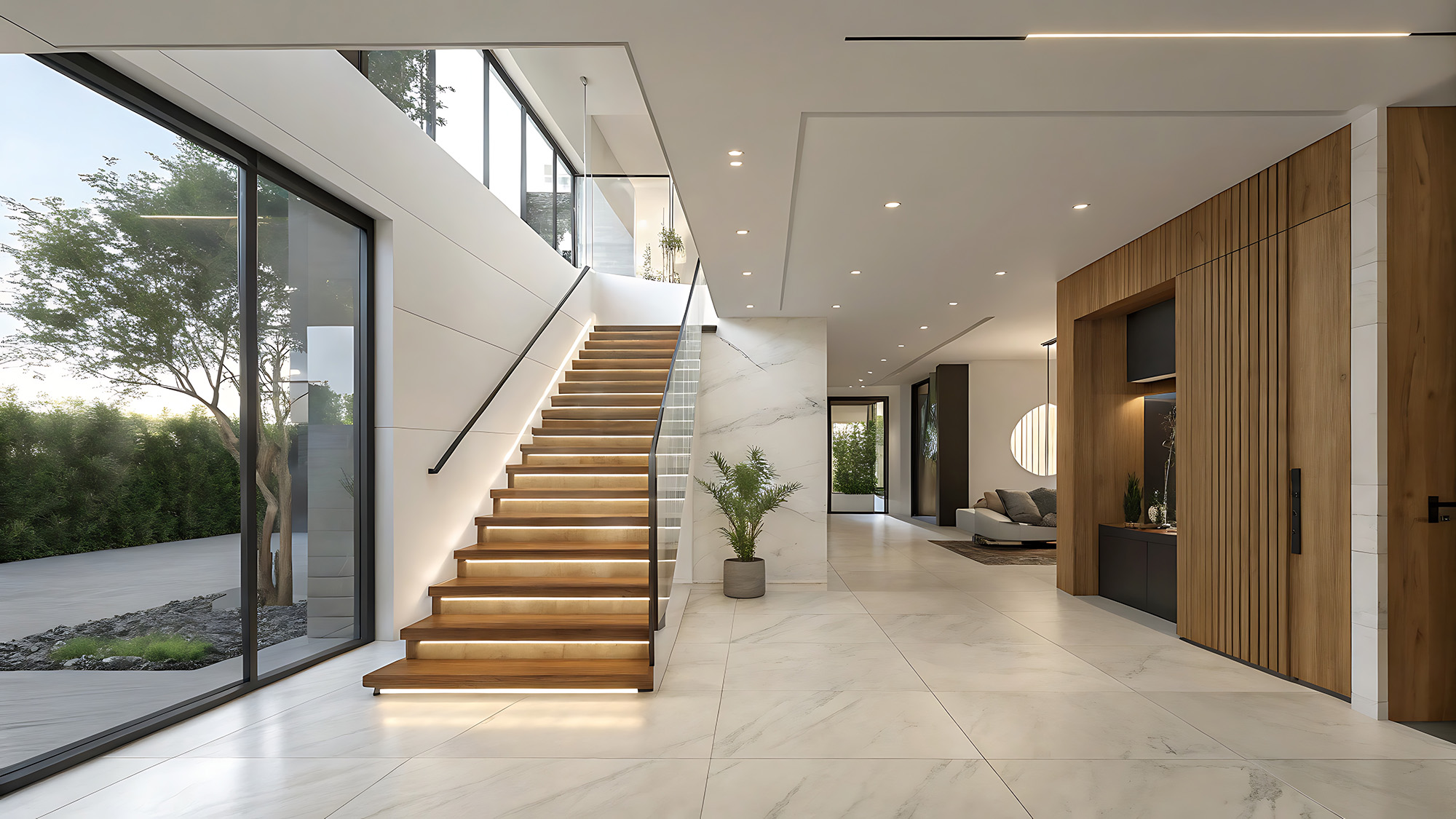
Choosing tile flooring involves more than finding a color and texture you like. The pattern in which the tile is installed can change how large a room appears, emphasize architectural features, and influence the overall character of the space.
A good tile layout starts with the room itself. Before tile installation begins, consider the dimensions, shape, furniture placement, tile size, grout lines, and visual style you want. Planning the pattern in advance can help prevent expensive changes after installation has started.
Straight Lay Keeps the Look Clean and Simple
A straight or grid layout is one of the most straightforward choices. Tiles are aligned in rows and columns, creating a clean appearance that works across many decorating styles. This pattern can be particularly effective with large-format tile because the simple arrangement allows the size, texture, and variation of the tile to remain the focus. It also works well when you want a calm foundation for more distinctive furniture or accessories.
Because the layout is relatively straightforward, it can be a practical choice for homeowners who prefer a timeless appearance. The quality of the installation still matters, though. Properly prepared surfaces, consistent grout joints, and careful alignment are essential to achieving a polished result.
Running Bond Adds Movement
A running bond pattern offsets each row from the one beside it. The familiar brick-inspired arrangement can make a room feel longer or introduce subtle movement across the floor. It is especially useful when you want something more dynamic than a basic grid without moving into an elaborate decorative pattern.
The amount of offset can vary depending on the tile and manufacturer's recommendations. Your installer should follow the requirements for the specific product, particularly with larger rectangular tiles. Running bond can also be used with wood-look tile to reinforce a plank-inspired appearance while retaining the characteristics of a tile installation.
Herringbone and Other Patterns Make the Floor a Feature
If you want the floor to become a stronger design element, consider a herringbone or another directional pattern. Herringbone arranges rectangular pieces in alternating directions to create a zigzag effect. It can add visual energy to a hallway, bathroom, kitchen, or entryway.
Because the pattern involves more cuts and precise placement, it typically requires more planning and installation labor than a simple grid. The room's dimensions also matter. A pattern that looks balanced in a large open space may feel overly busy in a small room. Before choosing a complex layout, ask to see a sample or digital rendering when available. It is much easier to adjust a pattern before installation than after the tile has been cut.
Use Tile Size to Influence the Finished Effect
Tile size and layout work together. Large-format tiles can reduce the number of visible grout joints and create a spacious, streamlined appearance. Smaller tiles can add texture and make decorative patterns more noticeable. Mosaic tile can be particularly useful for accents or areas where smaller pieces help follow the shape of the room. Do not choose a tile size solely because it is currently fashionable.
Consider the room's dimensions and the practical requirements of the installation. The Tile Council of North America also notes that tile selection and installation should account for the specific application, particularly in wet areas where surface characteristics, drainage, and other factors matter. That makes planning especially important for bathroom and shower projects.
Look at the Whole Room Before Installation
A successful tile layout should work with more than the floor. Consider doorways, cabinets, islands, plumbing fixtures, transitions, and focal points. For example, you may want full or visually prominent tiles in an area where they will be most noticeable rather than ending the layout with very narrow cuts.
A professional installer can help establish reference lines and determine how the pattern will fit before the installation begins. Boyer's Floor Covering offers tile flooring for kitchens, bathrooms, outdoor spaces, decorative walls, and accents, giving homeowners opportunities to use different tile formats and applications.
Balance Tile Flooring Trends 2027 With Timeless Design
The tile flooring trends 2027 may introduce new colors, formats, patterns, and textures, but your layout should ultimately work with your home's architecture and your personal style.
Look at samples together with your cabinets, walls, fixtures, and existing flooring. A pattern that feels exciting by itself may create too much visual activity once everything is combined.
Contact Boyer's Floor Covering today and visit our showroom to compare tile flooring, sizes, patterns, and layout possibilities before your tile installation begins. You can discuss the needs of your project in Reading, PA and throughout Wyomissing, Douglassville, Oley, Kutztown, and Fleetwood, PA while creating a tile layout that feels intentional from the first tile to the last.


