

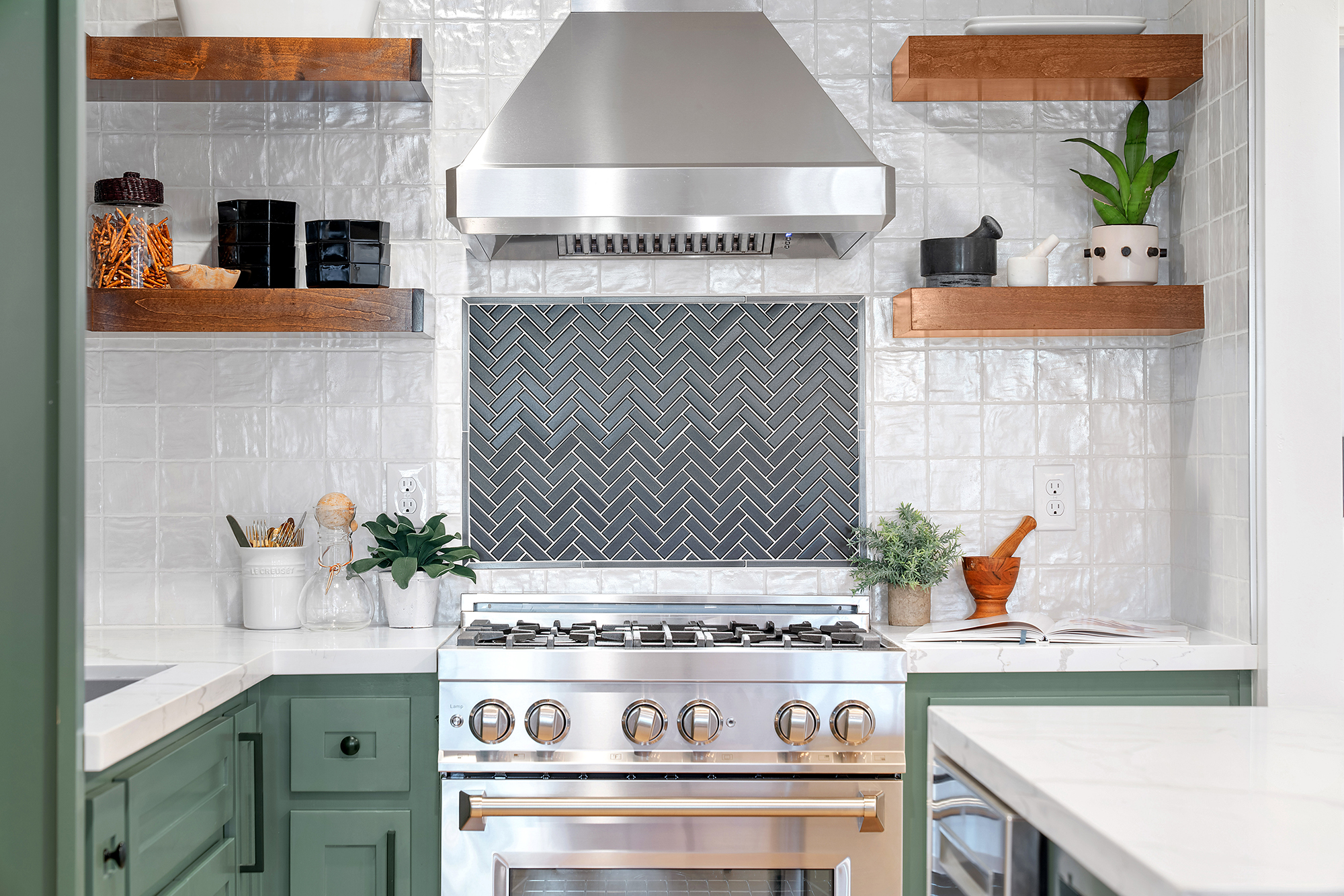
A kitchen backsplash protects the wall behind your sink, range, and countertops, but it also has a major influence on the room's overall style. Subway tile offers familiar proportions and a classic look, while large-format tile creates a more continuous surface with fewer grout lines. Both can work beautifully in a kitchen, so the right choice depends on your design preferences, wall dimensions, cleaning habits, and installation requirements.
Although tile flooring and backsplash tile may share materials and finishes, the best product for a wall installation should be selected for that specific application. Comparing the scale, grout, layout, and maintenance of each option can help you choose a backsplash you'll enjoy for years.
Subway Tile Brings Pattern and Timeless Appeal
Subway tile is commonly rectangular, with a traditional running-bond layout that offsets each row. Yet the familiar shape leaves plenty of room for personal style. You can choose glossy white tile for a bright, traditional kitchen, a colored glaze for a stronger accent, or a handmade-look surface for added texture. The layout also changes the effect.
A horizontal offset can make a wall feel wider, while vertical stacking introduces height and a cleaner, more contemporary rhythm. Herringbone patterns create movement, though they typically require more cuts and careful alignment. Because individual tiles are relatively small, subway tile can adapt to areas around outlets, cabinets, and windows. That flexibility is useful when a backsplash has several interruptions. Keep in mind that smaller tiles usually mean more grout joints, which require routine cleaning.
Large-Format Tile Creates a Cleaner Visual Surface
Large-format tile uses bigger pieces to cover more wall with fewer joints. Depending on the tile's proportions and finish, the result can feel streamlined, understated, or dramatic. Stone-look porcelain can create the appearance of a continuous slab, while solid-color tile offers a quiet backdrop for distinctive countertops or cabinetry.
Fewer grout lines can simplify routine cleaning, particularly around cooking areas where grease and food splashes collect. However, the grout that remains still needs suitable care, and the tile surface itself must be compatible with the kitchen's cleaning products and exposure. Large-format tile also requires careful planning.
The wall must be sufficiently flat, and the tile's weight, dimensions, and installation requirements need to be considered. Cuts around outlets and cabinets can be more demanding because a small measurement error may be more visible across a large piece.
Let Your Cabinets and Countertops Guide the Choice
The backsplash should work with the other major finishes in your kitchen rather than compete with them. If your countertop has bold veining, a simple subway tile may provide balance. If your counters and cabinets are understated, a large-format tile with subtle stone variation can become a quiet focal point.
Scale matters as well. Subway tile introduces a visible pattern that can give a small backsplash area definition. Large-format tile reduces visual interruptions and may help an open kitchen feel calmer.
Neither approach automatically makes a room look bigger; color, lighting, grout contrast, and the surrounding finishes all influence the result. Bring countertop, cabinet, and paint samples when comparing tile. Viewing the materials together is more reliable than choosing from a small image on a screen.
Installation Details Matter More Than Tile Size Alone
A successful tile backsplash starts with proper surface preparation, accurate measurements, and a layout planned around the room. The installer needs to account for countertop lines, cabinet edges, outlets, corners, and the location of visible cuts. A balanced layout can prevent narrow slivers of tile at the ends of a wall.
Grout color changes the final look. Matching grout makes joints less noticeable, while contrasting grout emphasizes the pattern. The correct grout and setting materials depend on the tile, joint width, and installation conditions. Sealing requirements also vary by material, so follow the product manufacturer's guidance.
Current tile flooring trends for 2027 may inspire finishes, colors, and patterns, but a backsplash should also suit your kitchen's architecture and your willingness to maintain it. Choose a look you can live with after a trend has passed.
Find the Right Tile Style for Your Kitchen
Subway tile and large-format tile can both deliver an attractive, practical backsplash when the product and installation suit the space. Subway tile offers pattern flexibility and a familiar decorative character.
Large-format tile creates a more continuous appearance and reduces the number of grout joints. Your decision should account for design, wall conditions, cleaning preferences, and the details of your kitchen. At Boyer's Floor Covering, you can explore tile options and consider how different styles might coordinate with your cabinets and countertops in Reading, PA.
Visit our showroom to compare finishes and see how tile colors and textures look in person. Before choosing a layout, discuss measurements, cuts, grout, and installation requirements with a flooring professional. Contact us today to talk through your project and explore options available to homeowners in Wyomissing, Douglassville, Oley, Kutztown, and Fleetwood, PA.


